
Article 3, paragraph 4 of the Gaming Act
The first condition comes before capital and before technology
A Croatian online casino is recognised by the Act through 1 fact that comes before all the others: where the company is seated. A company without a seat in the Republic of Croatia drops out of the procedure before any other condition is reached.
| Casino | Licence | Company | Threshold for checks | Open |
|---|---|---|---|---|
| Vave | Curaçao Gaming Authority | Latcas B.V. | at discretion | Go to the casino siteRead |
| Vave pays for the single link that leaves this site, and that is the whole of our commercial relationship with it. Its sportsbook and its casino sit on one account, so the same money covers both without a second stake — uncommon among operators that advertise themselves as crypto casinos. We read the licence number ourselves on 2 September 2026 in the Curaçao Gaming Authority register: OGL/2024/1676/0905, held by Latcas B.V., issued 19 May 2025, status active. | ||||
| Rocketpot | Curacao | Danneskjold Ventures B.V. | US$2,500 | Go to the casino siteRead |
| Bitcasino.io | Curaçao Gaming Authority | Moon Technologies B.V. | 2,500 EUR | Go to the casino siteRead |
| Wild Fortune | Anjouan Gaming Board | Metlait SRL | at discretion | Go to the casino siteRead |
| DuckDice | Anjouan Gaming Board | Zentari Limitada | at discretion | Go to the casino siteRead |
| Empire.io | Anjouan Gaming Board | Pixel Entertainment Limited | 2,000 USDT | Go to the casino siteRead |
| Metaspins | Curaçao Gaming Authority | Metaspins N.V. | at discretion | Go to the casino siteRead |
| Rainbet | Anjouan Gaming Board | RBGAMING N.V. | at discretion | Go to the casino siteRead |
| Shuffle | Curaçao Gaming Authority | Natural Nine B.V. | at discretion | Go to the casino siteRead |
| Wild.io | Curaçao Gaming Authority | Nonce Gaming B.V. | at discretion | Go to the casino siteRead |


One sentence settles the question
Someone looking for a Croatian online casino is usually looking for a house that answers to a Croatian authority. The Act answers that before any list of brands is opened.
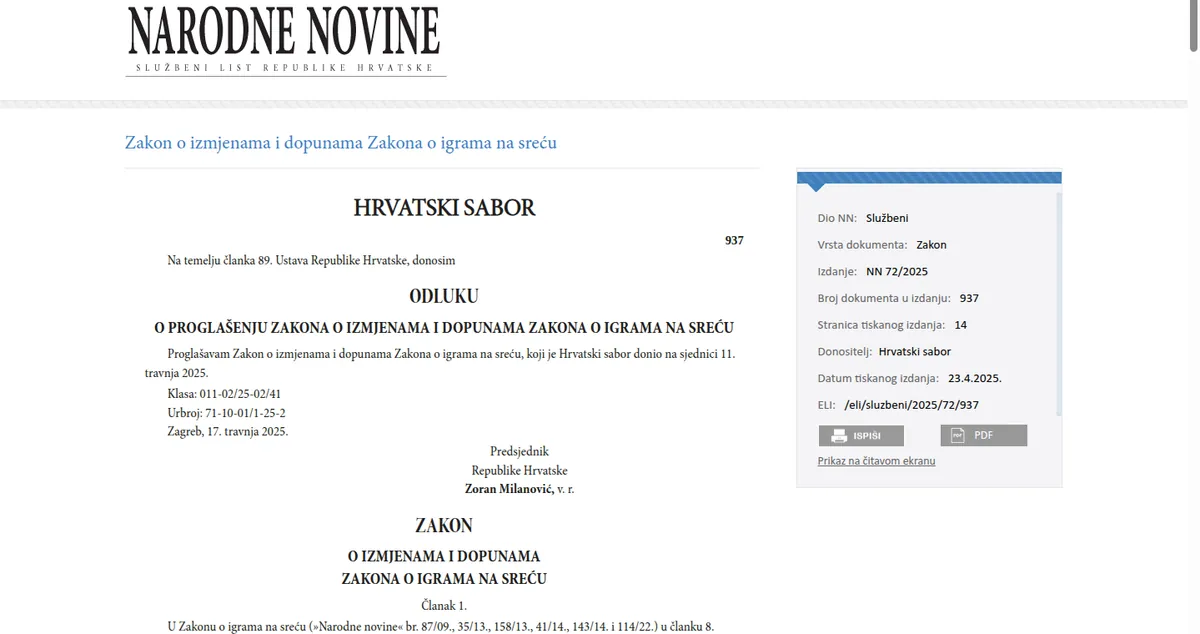
The answer sits in article 3, paragraph 4 of the Gaming Act:
“Pravo priređivanja igara na sreću iz članka 5. stavka 1. točke 2., 3. i 4. ovoga Zakona mogu na temelju odluke i odobrenja steći i druga trgovačka društva sa sjedištem u Republici Hrvatskoj.”
In English: the right to organise the games of chance under article 5, paragraph 1, points 2, 3 and 4 of this Act may also be acquired, on the basis of a decision and an approval, by other commercial companies with their seat in the Republic of Croatia.
The last five words of the Croatian carry the whole provision. The circle of companies that may acquire the right at all is limited by where the company is seated, and a seat is an entry in the court register, not a matter of assessment.
A company entered in Curaçao or on Anjouan drops out on that condition immediately. Questions about capital, equipment, guarantees and technical requirements never reach it.
The second condition stands right behind it
The seat is the first filter but not the only one. Article 35, paragraph 2 ties the right to organise online to a right that already exists:
“Trgovačkim društvima koja … imaju pravo na priređivanje igara na sreću u casinima može se odobriti pravo priređivanja igara na sreću u casinima putem interaktivnih prodajnih kanala on-line igranja.”
Commercial companies that hold the right to organise games of chance in casinos may be granted the right to organise those games through interactive online sales channels.
An online casino, then, goes only to a company that already holds the Croatian right to a casino on premises. The whole mechanism of that condition is unpacked on the page about who holds an approval.
The two conditions are independent of one another, and that matters. If a foreign company met one of them, the other would still be standing in the same place.
Lottery games take their own route
Alongside casinos, betting and slots, the Act carries a fourth kind of game separately. Under article 9, paragraph 2 the exclusive right to lottery games belongs to Hrvatska Lutrija d.o.o.
That is where the common misunderstanding comes from that Croatia has only one operator. The exclusive right covers one kind of game, while the other three stand open to other commercial companies subject to both conditions described above. The difference is set out on the page about Hrvatska Lutrija.
How a reader checks who they are contracting with
The check takes a few minutes and requires nothing but reading.
- Open the footer of the operator’s site and find the name of the commercial company. The brand name and the company name rarely coincide.
- Look at where that company is registered. A country, or a company-form suffix pointing to one, almost always sits beside the name.
- Check the list of web addresses published by Ministarstvo financija, Porezna uprava, the Croatian Tax Administration.
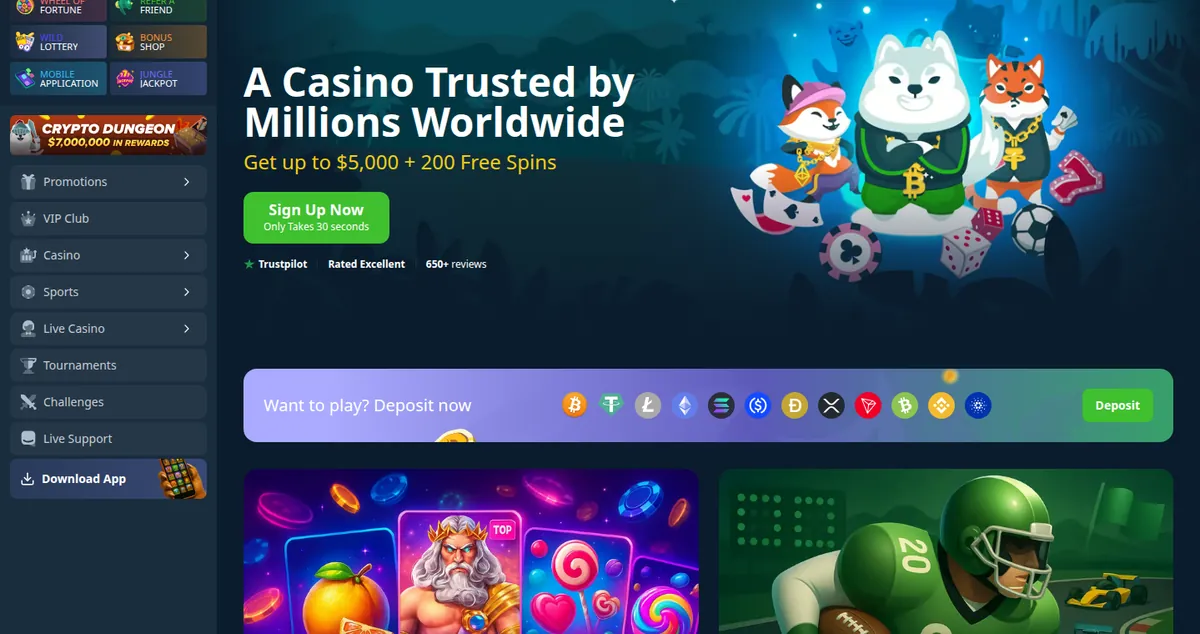
The first step alone answers the question in the title. Nine of the ten brands in our table publish a company name, and not one of those nine points to a seat in Croatia; all of them are written down on the page about the company behind the brand.
Who supervises, and where that is visible
Supervision over the organising of games of chance sits with Ministarstvo financija, Porezna uprava. That is also the body that publishes the list of operator web addresses for which a blocking order has been issued.
The list is public, downloaded as a spreadsheet, and anyone can look up a domain in it before sending money. The legal basis for the order comes from tax legislation rather than gaming legislation, which the page about the list of blocked addresses covers.
The order is addressed to whoever holds access, not to the player. A domain’s entry in that spreadsheet is not a penalty for a player but a notice.
Why the question has a price
The difference between a Croatian and a foreign operator is not whether play is permitted to the reader; it is who the reader turns to when something goes wrong.
With a company seated in Croatia there is a body that supervises it and a statute under which it answers. With a company seated in Curaçao what remains is a contract that company wrote itself, plus the register of the body that issued its licence — and that register confirms the existence and status of a licence, not the handling of payouts. What such a record shows is set out on the page about foreign licences.
That is why clauses on these pages are copied with their numbers. Where there is no supervisory body, the only remaining evidence is the text the operator published itself, and it is worth reading before you deposit.
What is left for a reader who has closed this question
Someone who has checked the seat and seen that none of the ten brands in our table meets that condition arrives at the next question: what is the choice made on, then.
The answer is four columns that genuinely compare, and they sit on the page about how the choice is made.
Before that it is worth reading what Croatian law says about participation itself, because this is where most of the mistakes are made. The wording sits on the page about what the Act says.